City of Dance Aims to Make Dance More Accessible in Los Angeles

Concert dance is usually presented indoors, on formal stages, for private audiences. But Benjamin Millepied wants to take it out of the theater for all to see.
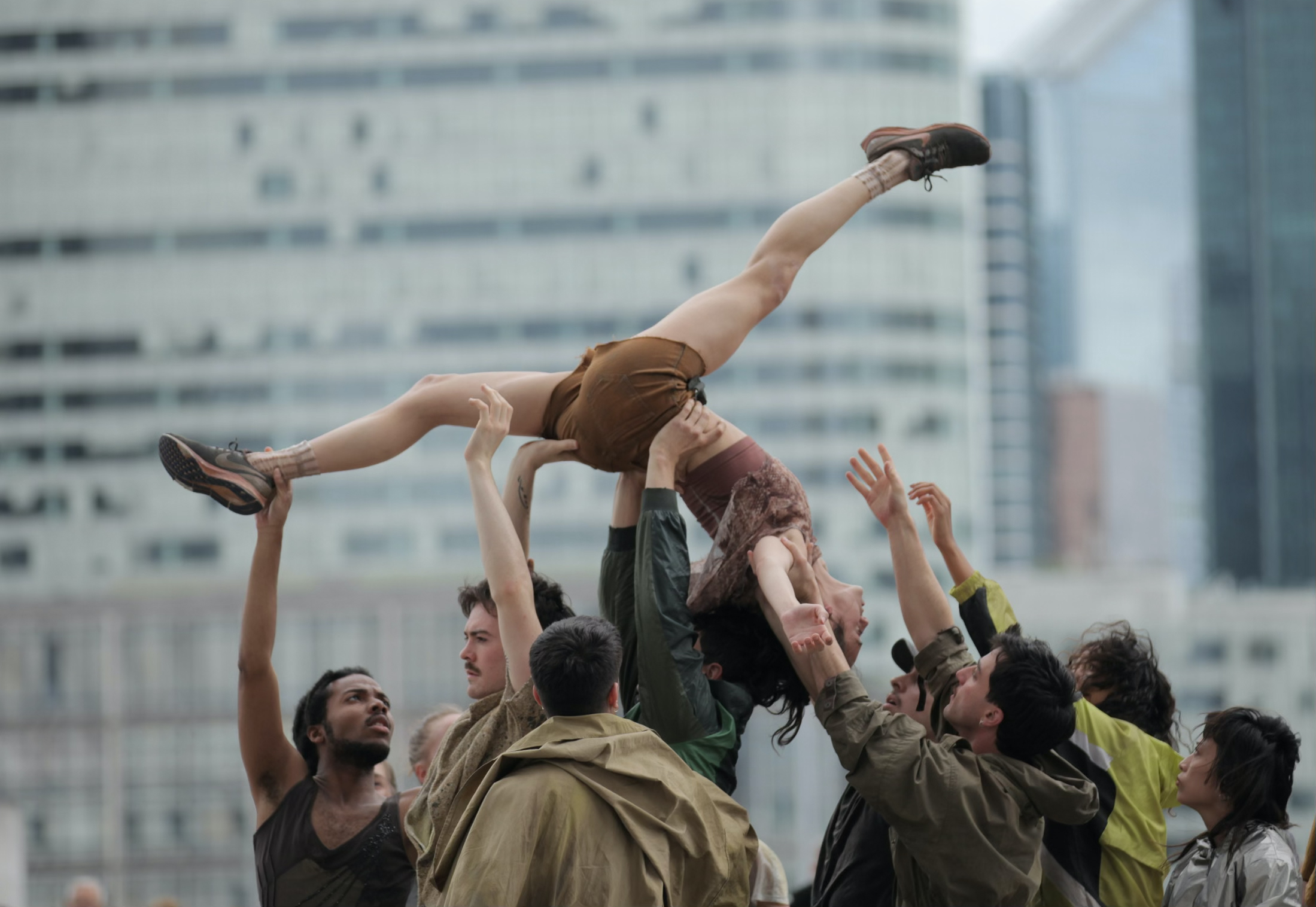
In June, Millepied’s L.A. Dance Project, in co-production with his Paris Dance Project, will mount the U.S. premiere of City of Dance, a series of free public performances in Los Angeles. Following the work’s Paris iteration in 2025 (under the name La Ville Dansée), the multiday presentation features a dance with contributions from five choreographers, which will be performed at several locations across Los Angeles, including Tongva Park, Century Park, the Marciano Art Foundation, the Los Angeles County Museum of Art, and Gloria Molina Grand Park. The 72-minute piece is set to Philip Glass’ score for Koyaanisqatsi, a 1982 nonnarrative documentary that interrogates how humans use and misuse nature in the service of technology and industrialization.
Millepied says the title “City of Dance” is a reference to the way bodies and landscapes carry the history of a city’s culture. He hopes the project will help bring that idea, and the beauty of dance, to a wider public. “The idea is to show this work to as many people as possible,” he says.
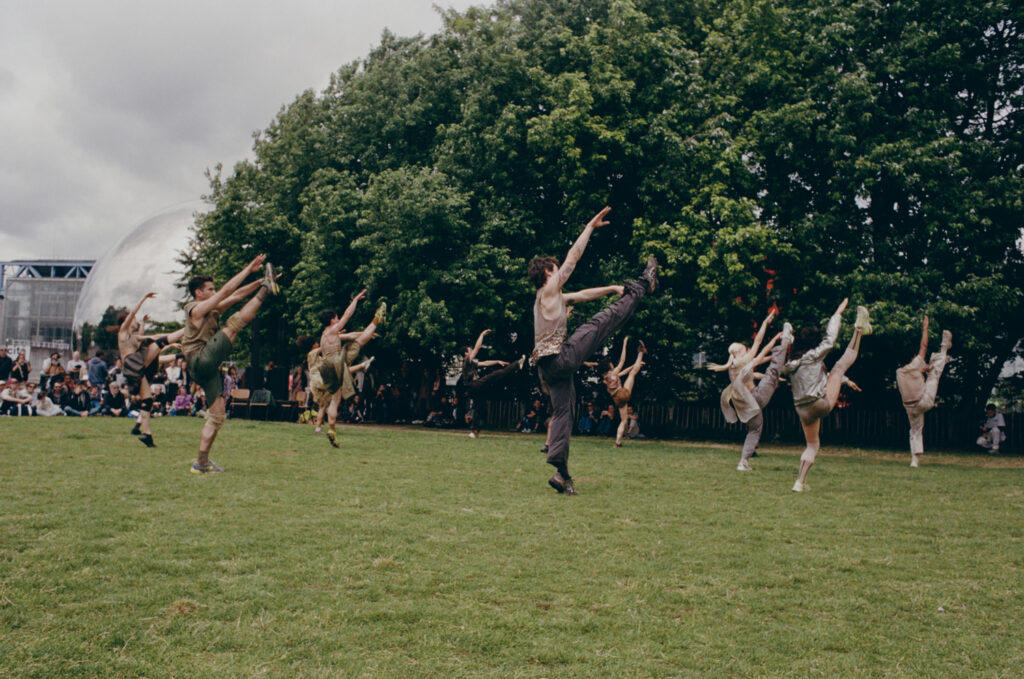
Each of the five participating choreographers—Dimitri Chamblas, Madeline Hollander, Millepied, Jamar Roberts, and Pam Tanowitz—was given a portion of the Koyaanisqatsi score and asked to create movement for the same 15 dancers, reflecting on the film’s themes. Their segments will be stitched together to form a single work. Chamblas, who also participated in the initial version in Paris, found working on the upcoming premiere to be vastly different because of the energy of the U.S. dancers. “The dancers move so generously, to exhaustion,” Chamblas says. “My segment is like a choreographed fight or game, but it’s all about the energy between the bodies and big parties, the run and fall.”
In Paris, with its high population density, city dwellers were more likely to stumble upon dances that popped up in train stations, business centers, or historical buildings. “You start making noise and moving, you potentially have, like, 500 people watching you,” Chamblas says. Los Angeles, by contrast, is sprawling, so City of Dance performances have required strategic planning and marketing. The outreach includes public conversations at selected sites with experts in environmental studies, technology, urbanism, and sociology, as well as free public dance classes and open rehearsals at L.A. Dance Project’s studios. “In the toughest city for dance in the country, you have to be pragmatic,” Millepied says. “Take venues where you’re welcome and that feel adequate for the piece.”
For Chamblas, Los Angeles is a fitting location for Koyaanisqatsi because of California’s green initiatives and emphasis on environmental justice. Both the film and the dance work consider how the choices humans make influence nature. And after the terrible wildfires in Los Angeles last year, City of Dance carries a powerful message about nurturing the landscape. “I think that’s a big component of the arts being for everyone, and the arts being a reflection of the times we live in,” Millepied says.


