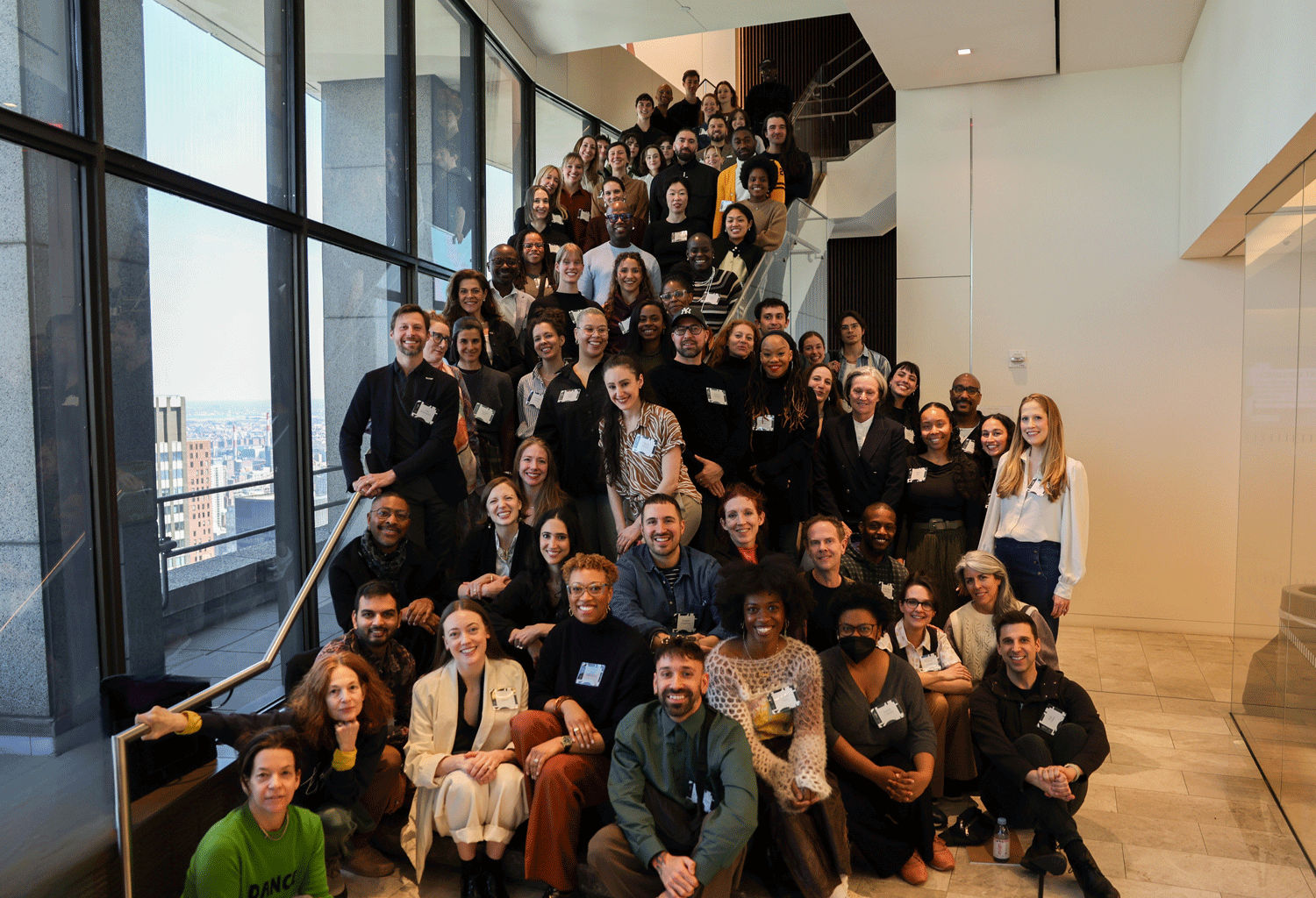
A Meeting of the Choreographic Minds at the First “Creators in Dance Summit” in New York City

Choreographers often work surrounded by people, but the highly coveted spot at the front of the room can also be a lonely one. Rarely do dancemakers have a chance to gather and discuss their successes and struggles. “We work in the most social of art forms, yet many of us are isolated,” says Troy Schumacher, founder and director of BalletCollective.
The first-ever Creators in Dance Summit, which BalletCollective convened in New York City on March 29, offered choreographers “a place to be together and to talk with no performance needed, where they could just show up, be themselves, and share,” Schumacher says. He assembled an advisory board for the project that includes Kyle Abraham, Robert Battle, Camille A. Brown, Ohad Naharin, Alexei Ratmansky, Pam Tanowitz, and Christopher Wheeldon. “Our goal was to create that space and see what happens,” Schumacher says.
There were no funders or press allowed—just 75 professional choreographers who were invited or applied to attend, representing diverse dance forms including African diasporic, ballet, commercial theater, contemporary, hip hop, and modern. They all agreed to foundational rules for the closed-door, confidential event, to allow for safe, honest exchange. “You cannot name individuals or institutions, and you can use what you received at the summit, but you cannot name who said it,” Schumacher explains.
The day began with an anonymous survey, which revealed that 37 percent of attendees felt artistic innovation and risk are somewhat or actively discouraged. Eighty-six percent said output speed and volume are somewhat or very rewarded. Eighty-seven percent don’t believe the ecosystem supports choreographers’ long-term development. None felt they had always been compensated appropriately in the last three years.
Then, breakout sessions—led by choreographers trained as facilitators—clustered artists by self-identified career stage: emerging, mid-career, and established. Later, attendees could choose in-depth discussion rooms by topic, like how to build relationships with collaborators or how to sustain a creative practice. Members of the summit’s advisory board fielded questions during interview sessions in the afternoon.
“There was a lot of vulnerability,” choreographer Sidra Bell shared in a public post-summit panel. Though the challenges are daunting and the statistics bleak, the experience was “fortifying” and “positive,” she said at the panel. “I felt renewed and inspired to really reach out to my colleagues and think about the ways that we can shift what’s happening in the industry now.” Choreographer Omar Román de Jesús felt similarly. “It was refreshing to know that we were all in it together,” he said at the public panel. “I’m not sure if we have solutions, but at least we started the conversation.”

That was the intention. “We’re here to just surface and understand what is there to solve,” Schumacher says. It’s “too much pressure on a group of people who are talking for the first time to figure out what’s the problem and how to fix it” all in one day, he says. And choreographers can’t address many of these issues alone.
BalletCollective is now crafting an in-depth anonymized report highlighting key insights from the summit, to share with presenters, foundations, artistic directors, donors, board members, and more. For example, Schumacher says, the gathering revealed that one major hindrance to choreographers is “the fact that they don’t have time to ideate before they get into the studio, and that they don’t have reliable sources of rigorous feedback.” Participants also pointed to another paradox: Genuine artistic risk, though often publicly encouraged and celebrated by commissioners and companies, is infrequently rewarded. At the public panel, choreographer Josh Prince described what sometimes feels like a bait-and-switch in which the message is: “We want you to be bold. We want you to be risky. Oh, but not like that.”
The positive response to the summit buoyed Schumacher’s hopes that it will be the first of many. “Our goal is to build this up into a sustainable, annual event in New York,” he says, and to provide a “framework for closed-door facilitated discussions that could happen in dance anywhere.”


