
Leslie Andrea Williams Bridges Past and Present at the Martha Graham Dance Company

For Leslie Andrea Williams, a dancer who is a storyteller to her core, the Martha Graham Dance Company is a fulfilling and invigorating place to call home. Over a decade into her tenure with the 100-year-old company, she is a powerful presence in both historic Graham works and contemporary commissions. Williams often steps into lead roles originated by Martha Graham herself. She was the first Black woman to perform the commanding lead in Chronicle, adding her own distinct perspective to a work born out of Graham’s anti-fascist beliefs.
Chronicle was the first Graham ballet Williams saw live, and it has become her favorite in the repertory to perform. “Doing the piece now gives me full-body chills,” she says. “I feel this connection to the people onstage and to the audience, like we’re speaking directly to them.”
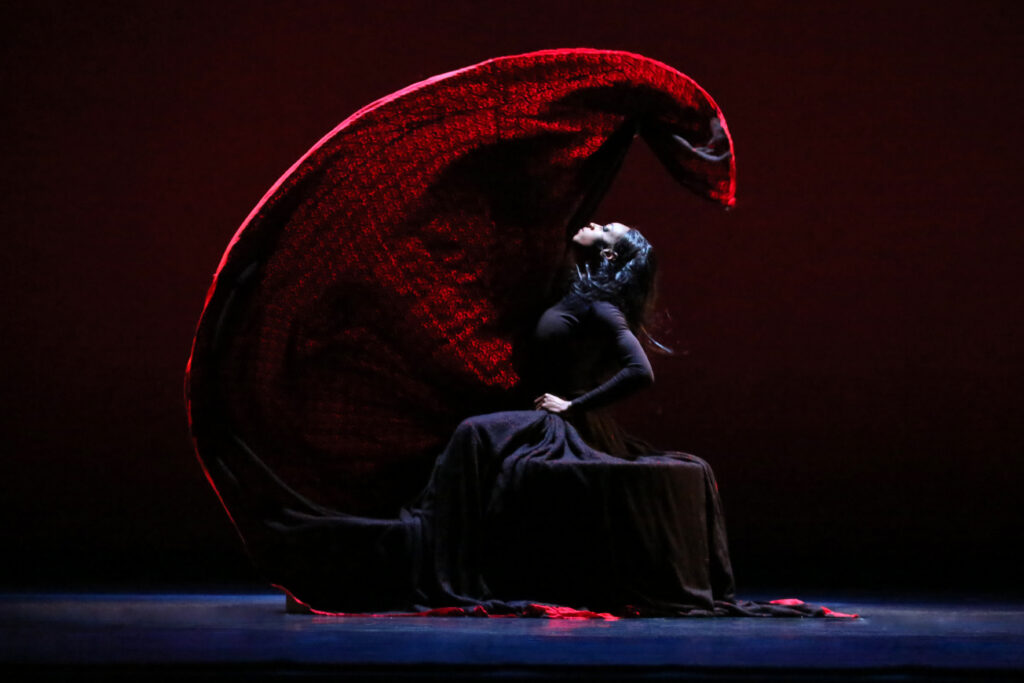
Williams didn’t always think Graham would be her destiny. Her early training in Raleigh, North Carolina, was “all ballet, full stop!” she says. But when she arrived at the University of North Carolina School of the Arts’ high school program, then-new-dean Ethan Stiefel changed the curriculum to require cross-pollination among concentrations. Williams began exploring contemporary, composition, and musical theater.
After graduating, she enrolled at The Juilliard School, where she dove into Graham technique for the first time with company alumna Terese Capucilli. “I wasn’t sure how I felt about Graham technique initially; I found it very challenging,” Williams says. “It still is!” But over time she warmed to its unique complexity. “I like how imperative it is to connect the breath to execute the movement, to utilize opposition in the body, how to simplify instead of muscling everything, and how the drama adds to the shapes,” she says.
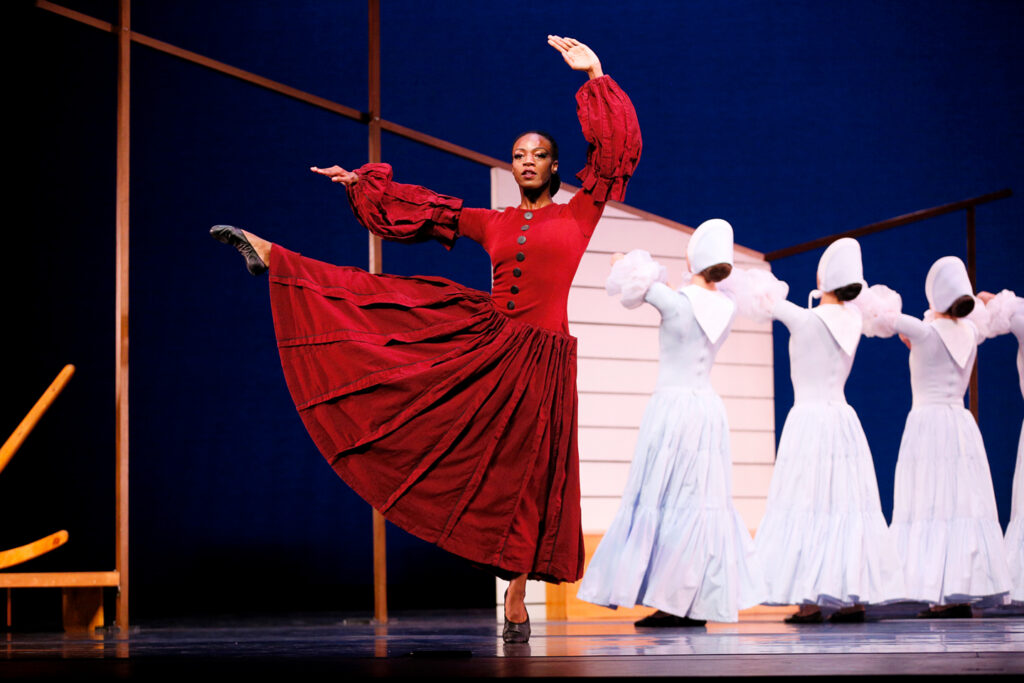
Williams’ burgeoning affinity for the technique deepened during her senior year at Juilliard, when she learned Graham’s Dark Meadow. While performing the soloist role “She of the Ground,” Williams had her first out-of-body experience. “I was not myself,” she says. “I was fully in the world that Martha had created, and it was wonderful.”
Janet Eilber, artistic director of the Graham company, was in the audience that night. Taken with Williams’ performance, she attended one of her Horton classes at Juilliard and then invited her to the company audition—where she offered Williams a contract on the spot. “Leslie has undeniable charisma, and she has grown into the power of her physicality and specificity of her expression,” Eilber says.

As a Black Graham dancer, Williams is part of a historic legacy. MGDC was one of the earliest American dance companies to racially integrate, with Graham hiring Japanese American dancer Yuriko Kikuchi in 1944. In 1951, Mary Hinkson and Matt Turney became the first Black dancers to join the company. At MGDC, Williams had access to images and videos of her Black predecessors, including Hinkson and Thea Barnes. She remembers looking at photos of Barnes in Lilith and feeling a visceral connection to her. “I saw her in this role I now do, and I felt like ‘Wait, that’s me!’ ” Williams says.
“Martha’s company was indicative of her belief in equal rights for all, and empowerment of the individual,” says Eilber. “She wasn’t specifically making dances about color, but now we have collaborations with artists like Jamar Roberts, Hope Boykin, and Tommie-Waheed Evans, and they are directly making points about race relations.” A confrontational solo for Williams opens Roberts’ We the People, setting the choreography’s defiant tone.
Many guest choreographers are drawn to Williams. Eilber says her charisma extends beyond the stage, that she is “a great connector, a friendly, open-hearted person with a good sense of humor.” During the creation process for his work CAVE, Hofesh Shechter was so inspired by Williams that he closed the piece with her transcendent improvised solo. “He saw something in my expression, and I’m so honored to be a vessel for the energy and language he created,” says Williams.
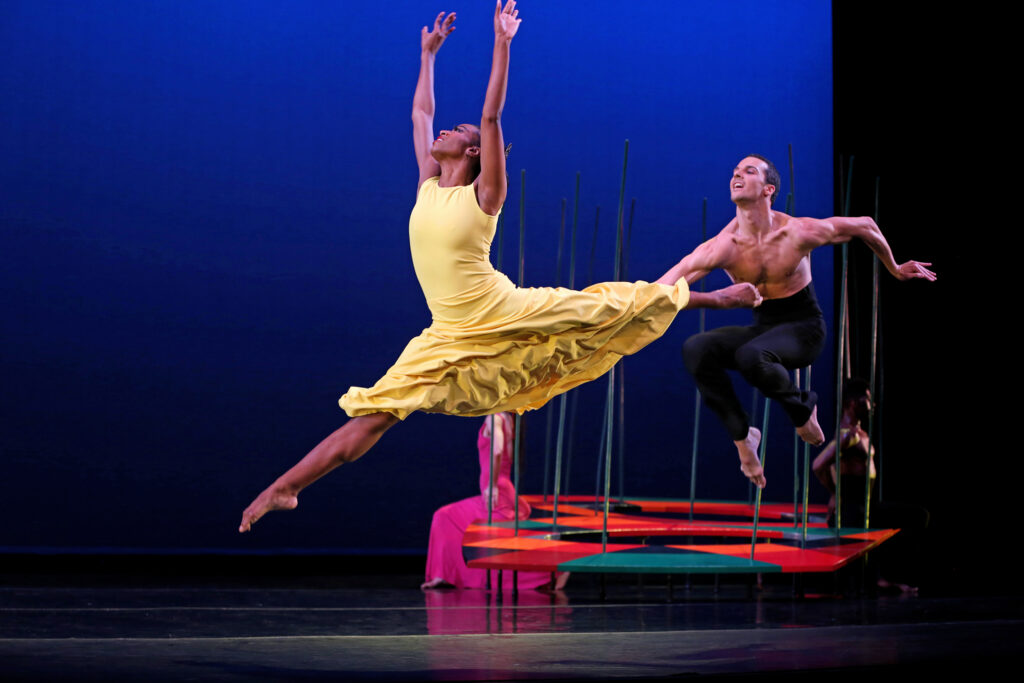
Outside of her work with Graham, Williams’ creative passions are multifaceted. She writes poetry and music, and has collaborated on several dance films. She created a libretto for opera singer Raehann Bryce-Davis, has been a model and muse for fashion brand Wiederhoeft, recently did a Lamentation-inspired campaign for jewelry brand Mociun, and serves on the board of Off-Brand Opera company. Her favorite Graham quote—“Be born to the instant”—has become something of a personal philosophy, onstage and off. “Being born to the instant to me means connecting with something outside of yourself, and feeling present in the moment,” Williams explains.
Grateful to be working in a company founded and run by strong women, Williams believes the journey of becoming a Graham dancer helped her embrace who she is as an artist and a person. “The company’s concept of individuality breathed new life into me,” she says. “None of the Graham greats were the same. They are all self-assured, but the way they dance is specific to them. After 11 seasons, I feel I’ve tapped into that for myself.”
As the company celebrates its centennial, Williams hopes her contributions will continue to expand and inspire diverse audiences and dancers. “To think young Black girls in the audience might see me and feel inspired by what I do, it’s worth it all,” says Williams. “With everything going on in the world right now, it feels special for me to tell my story—by way of Martha.”


