
Inside the International Dance League’s Electric Season 1 Opener

On Saturday, May 2, after months of waiting, the dance community gathered in New York City to witness the beginning of a new era: the launch of the International Dance League, which aims to treat open-style dance teams like sports franchises. In the birthplace of hip hop, the IDL kicked off its first season with an impressively produced event featuring six teams from all over the world.
The league is shaking up the competitive-dance scene by offering contracts to its top-level dance teams and hosting them in large venues. Rosters are set for the season; dancers have numbers and jerseys like they do in other league sports. And IDL competitions are not one-off events but rather a cumulative series, with scores stacking over the course of the season, culminating in a finale in Los Angeles this September.
The IDL format is decidedly different from those in most other dance competitions. Round 1 features three matchups where each team performs one routine. At the end of each match, there are six judge votes and one audience vote. The winner of each match up proceeds to Round 2, performing an entirely new routine, and the judges’ scores dictate final placings.
In New York City on Saturday, the six teams—The Royal Family (Auckland, New Zealand); Quick Style (Oslo, Norway); GRV (Los Angeles, California); Brotherhood (Vancouver, British Columbia); Jam Republic (Singapore), representing Southeast Asia; and 1Million (Seoul, South Korea)—showed off creativity, expression, subtext, and cultural literacy. Brotherhood, which won the IDL’s proof-of-concept kickoff event last July, continued to dominate, taking home the win in New York City. Quick Style, however, definitely had the most interesting trajectory of the night. Back in July, GRV decisively beat the Oslo team. On Saturday, Quick Style turned it around, pulling off a Round 1 upset against GRV with a set to Kendrick Lamar’s “N95,” and earning a tie-breaking fan vote. Quick Style continued to upset the widely expected placings by taking second place above New Zealand’s Royal Family, who took third.
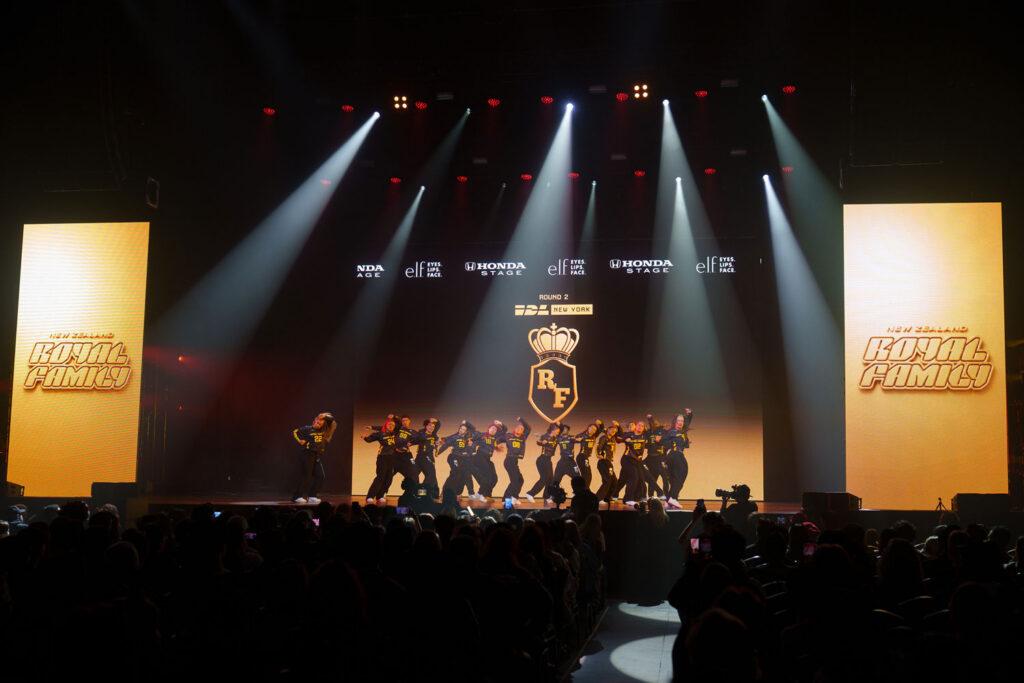
There wasn’t much trash-talking offstage, but onstage was a different story. Brotherhood’s Round 1 opener was a direct spoof—if not diss—of their opponent, 1Million, referencing the South Korean team’s routine from the July kickoff event. Meanwhile, Jam Republic ended their Round 1 set, where they faced off with Royal Family, with a move that simulated throwing down a crown—a clear reference to the ending of every Royal Family set.
Brotherhood also paid homage to New York City and tristate-area dance styles in their Round 2 set. The audience rustled with anticipation as the team approached the stage in Air Force 1 sneakers in the classic wheat color of Timberland boots, a New York City street-style staple. “Mannequin,” by Brooklyn’s beloved Pop Smoke, blasted through the speakers, and the crowd roared as Brotherhood pulled out phrases and movement influenced by local dance styles like litefeet, house, sturdy, shaking (Harlem shake), Jersey club (sometimes known as JerZ), and, of course, hip hop. After the event, audience member and New York City–based dancer and choreographer Nicole Hu said, “I love how they paid respect to New York City with the foundational styles, the song choices. They knew that they were coming to New York, and they were prepared.”
Saturday’s event also included a community division, featuring teams from the eastern and central U.S. The community division of the IDL is an investment in the pre-professional dancers without whom the professional competition circuit would not exist. The open-style dance competition scene is almost never lucrative; IDL’s professional division is one of the first attempts to make it a feasible career. But the community dancers—many of them also holding down nondance jobs—still push their artistry and athleticism for the love of it all.
In the community competition, The DC metro area’s Day One took home the $1,000 prize for third place, and Orlando, Florida’s theSQUAD took home the $5,000 prize for second place. New York City’s Narratiiiv won their first competition ever, with a beautiful, intricate set combining breaking, contemporary, and threading to Imogen Heap’s “Hide and Seek.” They decisively took home the $10,000 prize for first place.
In a time where dancers and nondancers alike often scoff at the idea of dance being treated as a sport, the IDL and its dancers stand unabashedly behind the league’s “This is our sport” catchphrase. During each pro-division round at the New York City event, the competing teams approached the stage in the IDL’s version of a tunnel walk, as team rosters flashed on the screen with each dancer’s name, face, and jersey number broadcast to both the live and streaming audience—a scene right out of the NFL or WWE. At an IDL press conference on the day before the event, Brotherhood’s founder and director Scott Forsyth said, “If a sport is competing against another team, if it’s training vigorously, if it’s having a specific set of skills that you’ve trained your whole life for, that you’re extremely good at; if it’s going toe to toe with other teams, then I truly believe [dance] is a sport.”
Between the community-division teams, which had hometown fans cheering for them, and the pro-division teams, which many dancers and audience members have followed for years, the energy in the theater on Saturday was electric. Allegiances to teams were forming in real time. Sophie Anderson, executive director of New York City–based team The Neighbors, said after the competition: “I’m not a sports fan, but I am a big fan of dance. And now I finally understand people who watch sports.”


